


The widespread protests that began in late December 2025 (December 28) in Iran escalated into one of the deadliest crackdowns in the country’s contemporary history. Sparked initially by a sharp rise in the cost of living, the demonstrations rapidly spread into nationwide rallies across all 31 provinces of Iran. Protesters, particularly from the young Generation Z, openly demanded the overthrow of the Islamic regime. This uprising marks the fourth major wave of protests since the Green Movement of 2009, and in its nature and demands, it maintains a direct continuity with the “Woman, Life, Freedom” movement of 2022.
While people had sustained a continuous street presence for nearly ten days, Reza Pahlavi, son of Iran’s last Shah, issued a call for gatherings on January 8 and 9 at precisely 8:00 p.m. This announcement, on one hand, effectively granted the regime’s forces a 48-hour window to prepare for a large-scale, coordinated suppression, carried out under the cover of night. On the other hand, Reza Pahlavi’s statements across various platforms regarding the “defection of 50,000 military personnel from the regime’s ranks” instilled a false sense of hope among the people; a hope that suggested taking to the streets would no longer carry the immediate risk of direct targeting.
Yet the reality proved starkly different. At 8:00 p.m. on January 8, forces of the Islamic Revolutionary Guard Corps (IRGC) and Basij, positioned in mosques, government buildings, and military bases, stood fully prepared for repression. Simultaneously, telephone and internet communications were severed to shield the unrestrained violence of government forces from the eyes of the media and the international public.
IRGC and Basij members, armed with Kalashnikovs, machine guns mounted on pickup trucks, pistols, and even cold weapons, opened fire, both from within and outside the crowds, on unarmed civilians who had come to the streets empty-handed.
This wave of protests represents a turning point in the Iranian government’s approach to suppression: one in which the “physical elimination of protesters” became an overt and explicit tool for quelling dissent, an approach that extended even into hospitals.
The presence of medical equipment such as Foley catheters (urinary), endotracheal tubes (intubation), and cardiac monitoring electrodes on bodies in morgues indicates that many victims were under active medical treatment at the time of death, and that their fatalities were not the direct result of initial injuries. The combination of such equipment with fatal gunshot wounds to the head strongly supports the hypothesis of extrajudicial executions (“finishing shots” or “tire khalas”) carried out on hospital beds.
There are also reports of organized security force raids on hospitals in various provinces, including Ilam, Mazandaran, Tehran, and Karaj. Separating the wounded, transferring injured protesters by truck to unknown destinations, obstructing medical care, abducting the injured and the deceased, and extorting money from families, these actions constitute clear violations of humanitarian law and medical neutrality.
The concentration of gunfire on vital body areas (head, neck, and chest), along with thousands of reported pellet-induced eye injuries, points to explicit orders for “shoot-to-kill” issued from the highest levels of the country’s security apparatus. Direct shots to the head were repeatedly employed. Reports also indicate the involvement of Iraqi Shia militias and sniper fire from rooftops.
Families of the victims have been forced to pay exorbitant sums, up to 700 million tomans (approximately £3,700) , under the label of “bullet money” to retrieve bodies. In some hospitals, blood transfusions to the wounded have been prohibited.
Death toll figures show the widest discrepancy between official and independent sources, and verification remains extremely difficult due to the digital blackout:
- Physicians inside Iran (drawing from eight ophthalmology hospitals and 16 emergency departments) have conservatively estimated at least 16,500 to 18,000 killed, most of them under the age of 30. This figure is described as cautious. Supreme Leader Ayatollah Khamenei has acknowledged only “a few thousand” deaths.
- The Human Rights Activists News Agency (HRANA) has reported 4,902 confirmed deaths and 9,387 suspicious cases under review, suggesting a potential total exceeding 14,000. The United Nations has warned that the overall toll may surpass 20,000.
- Sources inside Iran told CBS News that at least 12,000—and possibly as many as 20,000—have been killed. A Washington-based source estimated 10,000 to 12,000. Regime officials have admitted to roughly 2,000 deaths, attributing them to “foreign terrorists.”
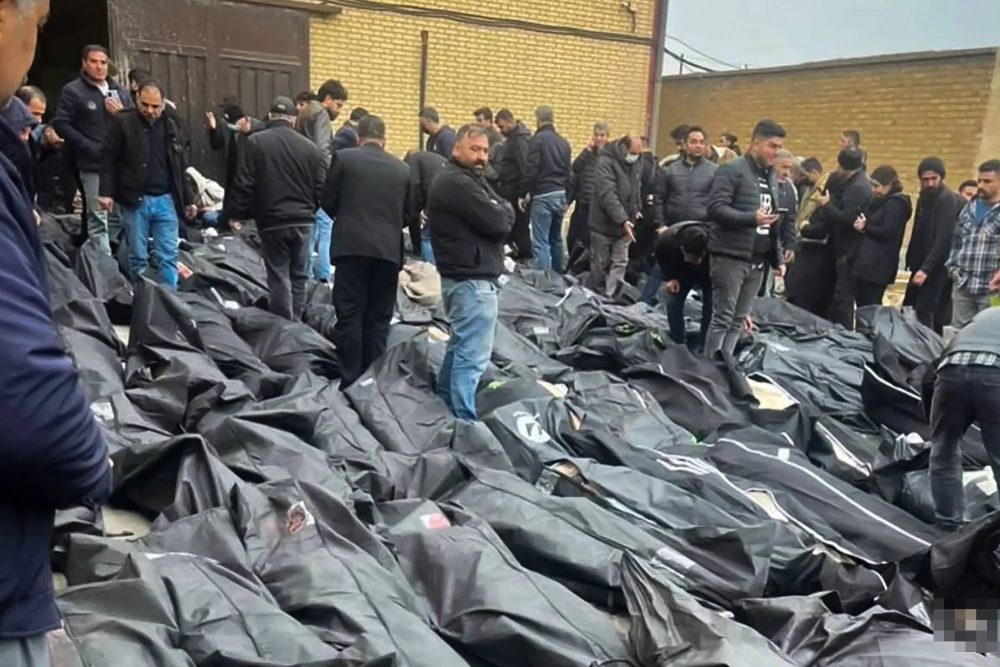
Verified videos, such as a 16-minute clip from Tehran’s Kahrizak morgue, show at least 366 to over 400 bodies. A single attack in Mazandaran province alone claimed 75 lives.
Injured and Eye Injury Statistics
- Total injured: 330,000 to 360,000 people, including children and pregnant women. Many injuries stem from direct bullets, birdshot pellets, and deep wounds.
- Eye injuries: At least 700 to 1,000 individuals have lost one eye. Noor Hospital in Tehran recorded 7,000 eye injuries, with overall estimates exceeding 8,000 people blinded by birdshot pellets across various cities. Surgeons have likened the level of violence to a war zone.
Security forces have threatened private hospitals in Tehran to hand over names and addresses of protest-related patients, and some injured individuals have been abducted directly from hospital wards.
Arrest Statistics
HRANA has reported over 26,000 arrests. Earlier estimates from the UN and others ranged from 18,400 to 26,000, though precise figures remain incomplete due to communication blackouts. Arrests have included checkpoint searches for evidence of protest participation on phones and bodies, as well as abductions from hospitals.
These protests reflect the profound despair of the Iranian people toward the regime—a society in which more than 90 percent (according to surveys) desire fundamental change. Despite the bloody repression, protesters declare that “fear has departed”: they will either die in the streets or fade quietly at home. The toll continues to rise, and the world watches, awaiting decisive action. This report is based on data available as of January 22, 2026, and may be updated with new information.